Rebuilt vs Remanufactured Audi Q3 Engines – Expert Insights from Real Garage Diagnostics and Customer Cases
Rebuilt vs Remanufactured Audi Q3 Engines – Expert Insights from Real Garage Diagnostics and Customer Cases
- April 11, 2026
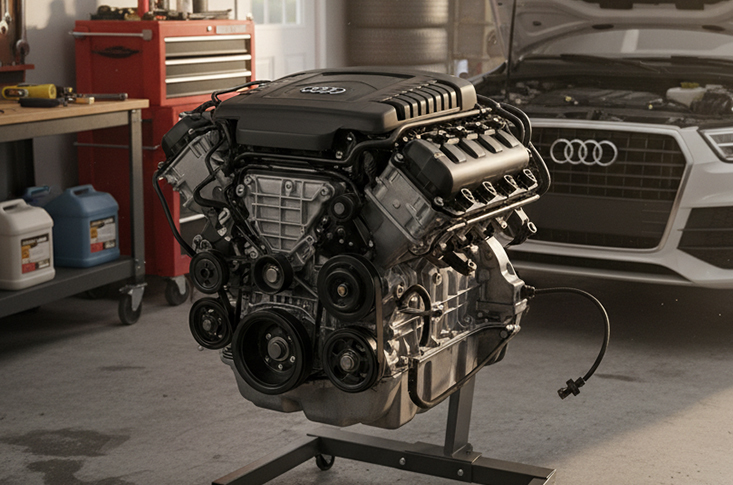
What Exactly Is a Reconditioned Audi Q3 Engine and Why Does the Terminology Matter Before You Buy?
When a customer walks into a garage asking about a reconditioned Audi Q3 engine, the first thing a seasoned technician does is pause and ask: "What do you mean by reconditioned?" It sounds like a pedantic question, but it directly shapes what they receive, what warranty they are entitled to, and how long that engine will actually last inside their vehicle. In the UK market, the terms rebuilt Audi Q3, remanufactured Audi Q3, and recon engine are used almost interchangeably by sellers — yet they describe processes that are worlds apart in scope, cost, and outcome. A rebuilt unit typically means a worn engine has been stripped, inspected, and reassembled using a mix of new and cleaned original components. A remanufactured Audi Q3 engine, on the other hand, follows a far more rigorous process: it is completely disassembled, every part is measured against OEM (Original Equipment Manufacturer) tolerances, worn components are replaced — not just cleaned — and the assembled unit is tested under load conditions before leaving the workshop. Understanding this distinction before searching for an engine for sale in UK could save a driver thousands of pounds in premature failures.
From a diagnostics standpoint, real garage cases consistently show that mismatched expectations about engine condition cause the most disputes. In one recurring scenario, a customer purchases what they believe to be a fully reconditioned engine but later discovers the cylinder bores were never honed, the crankshaft was never ground, and the pistons were the originals cleaned up with a wire brush. The compression test that should have been carried out during assembly — and verified on delivery — was never performed. British Engineering Standards (BS EN) for engine rebuilding do exist, and reputable workshops follow them, but the unregulated end of the market does not. Buyers searching for a replacement Audi Q3 engine online should always request documented evidence of machining work carried out: cylinder head resurfacing records, oversized piston and ring specifications, crankshaft grinding reports, and engine block honing data. These are not optional extras — they are the minimum evidence of a proper rebuild, and any honest supplier will provide them without hesitation.
How Do Real Garage Diagnostics Reveal Whether a Used Audi Q3 Engine Is Worth Fitting?
Before any used Audi Q3 engine is recommended to a customer, a proper diagnostic workflow should precede the purchase decision entirely — not come after the unit is already on the workshop floor. Experienced technicians begin with a compression test across all cylinders to establish a baseline. On the Audi Q3's 1.4 TFSI and 2.0 TDI variants, which dominate the UK secondhand market, acceptable compression variances are tight. A spread of more than 10–15% between the highest and lowest cylinder is a red flag, regardless of what mileage figure appears on the paperwork. Beyond compression, diagnostic trouble codes (DTCs) stored in the ECU are read to understand the engine's recent fault history. A second hand Audi Q3 engine that shows historic misfires, oil pressure warnings, or knock sensor faults may have underlying damage that no amount of cleaning will resolve. Buyers who rely solely on visual inspection or a seller's description — especially when purchasing a used engine for sale near me — routinely end up back at the garage within months.
The donor vehicle's condition plays a significant role in determining value, and this is an area where garages with genuine workshop experience offer something online listings simply cannot. A 2nd hand engine pulled from a Q3 involved in a front-end impact — even a minor one — may have suffered oil starvation during the accident, leading to bearing damage that only becomes apparent under sustained load. Reputable suppliers carrying out proper sourcing will check HPI clearance documentation and verified mileage documentation on the donor vehicle before stripping the unit. Service history records tell the story of how the engine was maintained: was the oil changed at the correct intervals? Was the timing belt replaced on schedule? For customers trying to find engine for my car at a competitive price, these supporting documents are often more valuable than the low headline cost. A cheap engine without provenance is rarely cheap once the full labour and parts bill come in.
What Does the Engine Price Actually Cover — and Where Do Hidden Costs Catch Buyers Out?
One of the most common sources of frustration among Audi Q3 owners is discovering that the reconditioned engine price they were quoted covers only the unit itself — not the extensive associated work required to install it correctly. A replacement engine supplier near me might advertise a competitive price, but that figure rarely includes the water pump, thermostat, timing belt or chain kit, or the fluid flush and refill that are non-negotiable on any engine swap.
Fitting a replacement engine without renewing the timing components is one of the most expensive mistakes made in independent garages, and it happens with surprising regularity. The ancillary parts on a Q3's TFSI or TDI engine are not expensive relative to the engine itself, yet skipping them on the grounds of cost is a false economy that regularly ends in catastrophic engine failure within 10,000 miles. A well-structured reconditioned engines price list UK from a reputable supplier will break costs into unit price, ancillaries, and fitting labour separately — if these are bundled without explanation, that is worth questioning.
Where Should You Actually Buy a Replacement Audi Q3 Engine — and What Separates Trustworthy Sellers from Risk?
The question of where to buy engines for a Q3 is one that generates more anxiety among Audi owners than almost any other repair decision, and with good reason — the stakes are high and the market is crowded with variable-quality suppliers. At the premium end, established reconditioned engines UK specialists operate with full quality documentation, clear warranty terms, and verifiable customer testimonials backed by Trustpilot ratings or equivalent platforms.
These businesses typically stock units with low-mileage petrol and diesel configurations sourced from properly maintained donor vehicles, and they can provide the provenance paperwork that informed buyers now routinely demand. At the other end of the spectrum, listings for a used engine sale on general classified platforms frequently arrive with no documentation, no compression data, and delivery terms that leave the buyer exposed to the full risk of a defective unit. The appeal of these listings — price — rarely survives contact with the reality of a second workshop visit to diagnose the fault and a third to source a replacement.
Why Does Choosing the Right Engine Supply and Fitting Service Matter More Than the Engine Itself?
A perfectly rebuilt engine fitted incorrectly is still a failed job — and this is a truth that experienced technicians return to repeatedly when reviewing customer complaints. The quality of engine supply and fitting work determines whether a reconditioned unit performs to its potential or develops problems within weeks of installation. Fully certified technicians working with an engine hoist and specialised tools make measurable differences: correct torque sequences on head bolts, proper pre-lubrication of bearings before first start, accurate timing alignment verified with manufacturer-specified locking tools rather than eyeballed approximations.
At VOSA-approved garages, these processes are documented and traceable. A customer searching for reconditioned engines fitted near me should ask specifically whether the fitting garage uses manufacturer-specific procedures for their Q3 variant — and whether the fitting team is familiar with the particular quirks of Audi's TFSI direct-injection systems, which require precise fuel rail priming before initial startup to avoid dry-running damage.
What Do Real Customer Cases Teach Us About Getting a Remanufactured Audi Q3 Engine Right the First Time?
The most instructive engine replacement cases are rarely the dramatic ones — they are the mundane, avoidable situations where a driver makes a reasonable-seeming decision that an experienced technician would have steered them away from. One pattern that surfaces repeatedly involves customers choosing a used motor engine at a significant discount to a fully remanufactured Audi Q3 unit, only to discover within 15,000 miles that internal combustion assembly tolerances were never verified on the used unit.
Compression testing carried out at the point of installation showed numbers within acceptable range, but without confirmation of oversized pistons and rings, crankshaft grinding, and engine block honing, the tolerances drifted under thermal cycling. A second engine replacement followed within two years of the first, making the total cost considerably higher than the remanufactured unit would have been from the outset. The lesson is not that used engines are always poor value — it is that the absence of documented machining work is a liability that eventually presents itself as a bill.


